
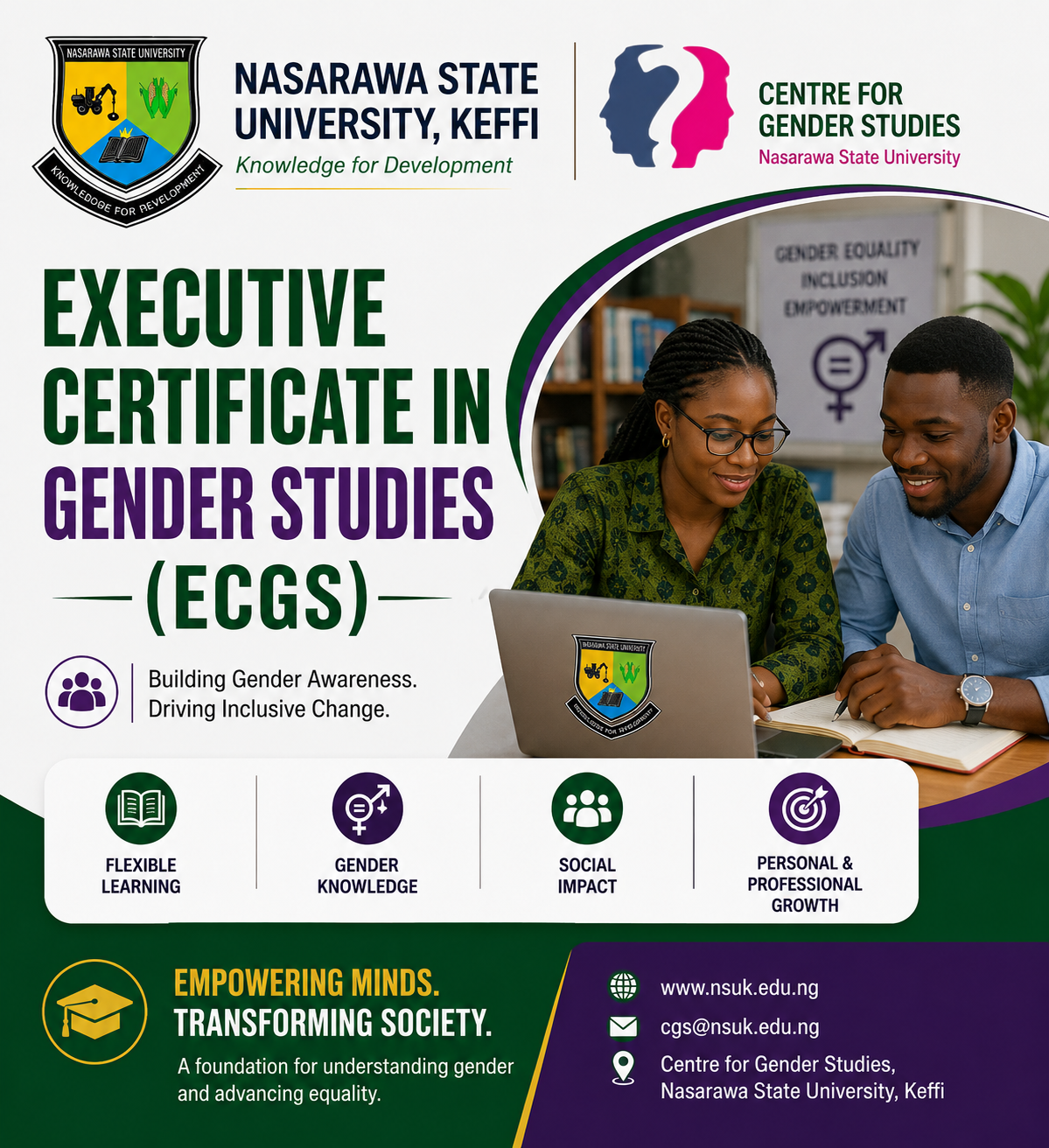
Executive Certificate in Gender Studies (ECGS)
The Certificate Programme in Gender Studies is a nationally recognized programme designed to provide candidates with the knowledge and practical skills necessary for addressing gender-related issues in contemporary society. The programme is suitable for students, public servants, development practitioners, community leaders, and individuals interested in gender and social development. The focus of the programme is on critical issues and emerging developments relating to gender equality, women empowerment, human rights, leadership, social inclusion, advocacy, and sustainable development.
Objectives of the Programme
1. To prepare, qualify and Upgrade the students to run a Part-time Certificate Programme in Gender Studies
2. To prepare students for Gender Studies, as academics, researchers in higher education institution, research institutes and as consultants in organizational system and societal management dynamics
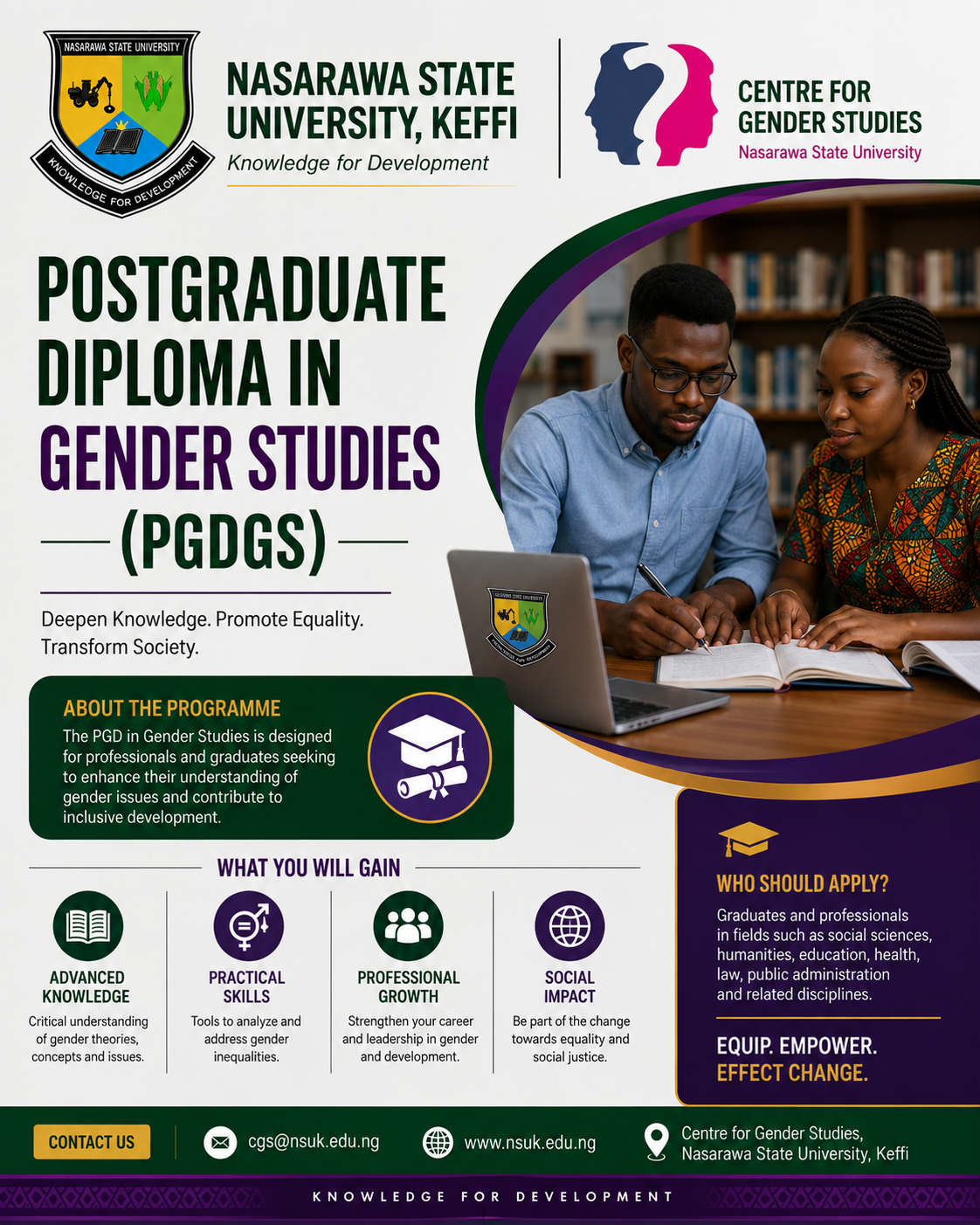
Postgraduate Diploma in Gender Studies (PGDGS)
The Postgraduate diploma in Gender Studies is a national recognized qualification providing candidates with the competencies and knowledge necessary for public service delivery in the increase challenging policy environments. It is suitable for new graduates and those with managerial and/or public sector work experience. The focus of the programme is on critical issues and key developments relating to public management, leadership, strategy, ethics, performance management and human resource management.
Objective of the Programme
1. To prepare, Qualify and Upgrade the students to run a Part-time Postgraduate Diploma programme in Gender Studies.
2. To develop awareness of how Gender perceptions, shape personal consciousness and interpersonal relationship.
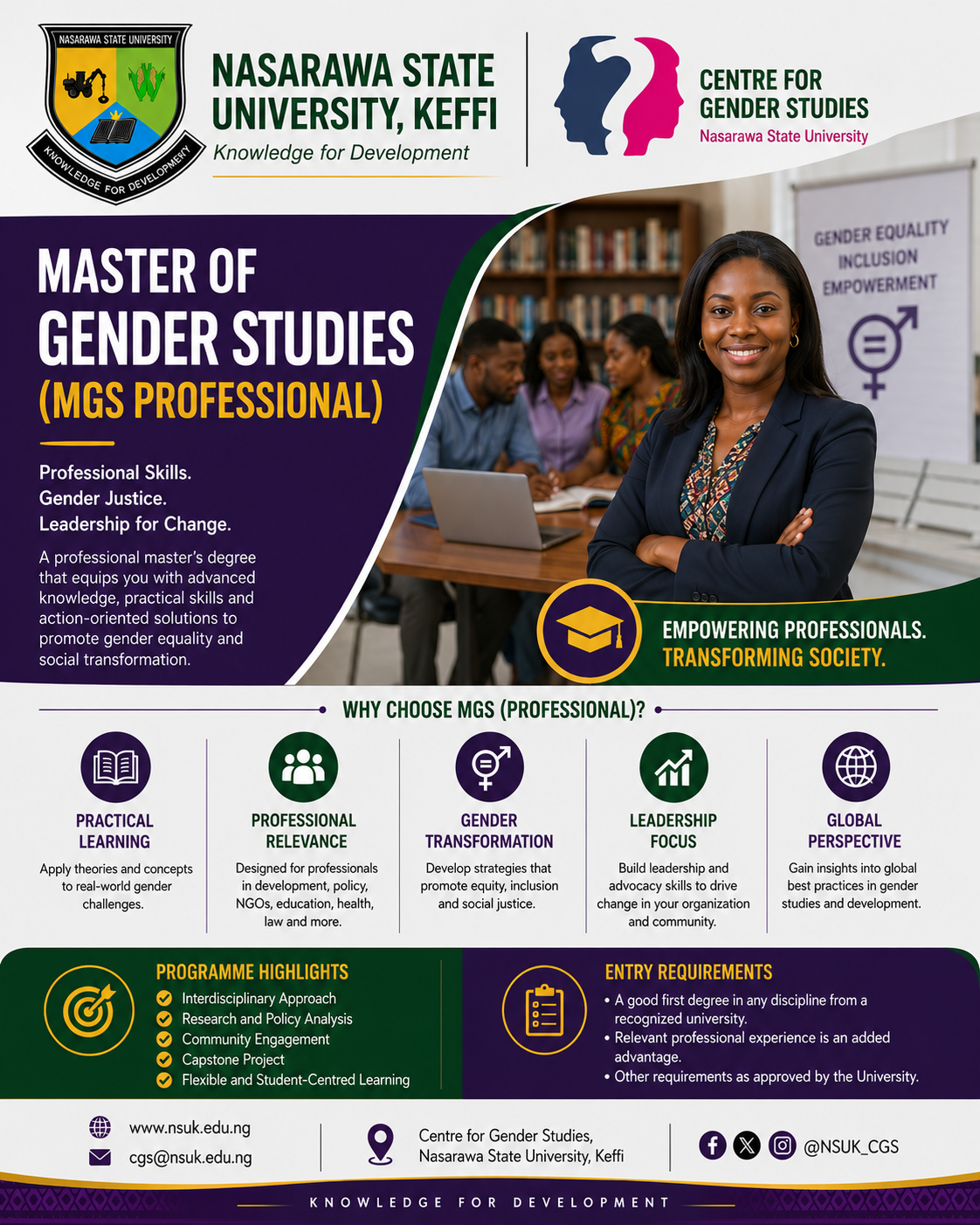
Master of Gender Studies (MGS)
This programme is designed and aimed at training academics, researchers, development practitioners, policymakers, and professionals in the field of Gender Studies. The programme seeks to provide candidates with advanced knowledge and analytical skills required for understanding and addressing contemporary gender issues in society. It focuses on critical areas such as gender equality, public policy, women empowerment, leadership, human rights, governance, peacebuilding, and sustainable development. The programme is also structured to equip students with research competence and interdisciplinary perspectives necessary for effective policy formulation, advocacy, teaching, and professional practice in both public and private sectors.
Objective of the Programme
1. To prepare Qualify and Upgrade the students to run a full-time Master in Gender Studies programme in Gender Studies.
2. To foster in-depth knowledge in a chosen area of specialization.
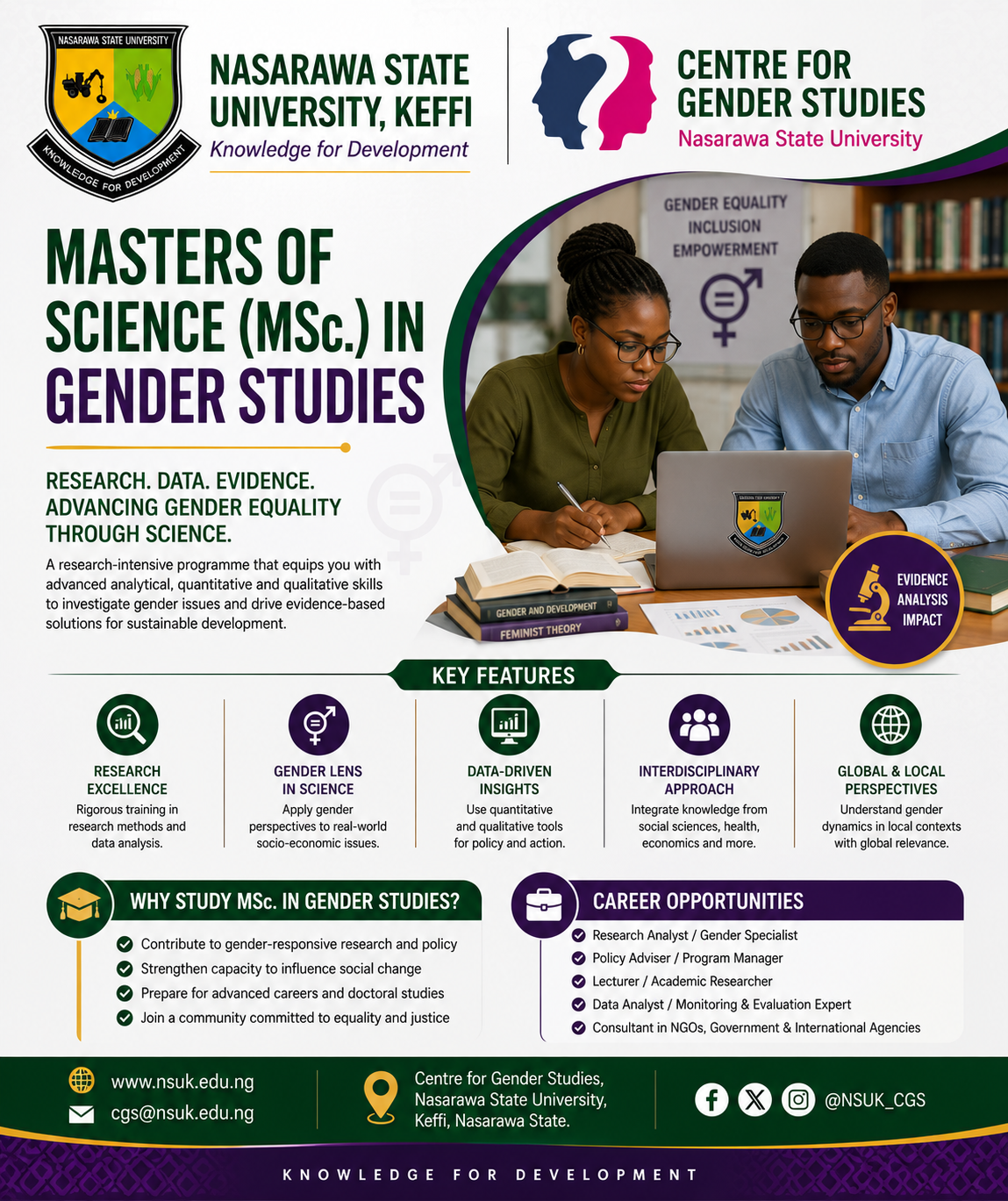
Masters of Science (MSc.)
The Master of Science (M.Sc.) Degree Programme in Gender Studies is designed to provide advanced academic and professional training in the field of Gender Studies. The programme aims at equipping students with in-depth knowledge, interdisciplinary perspectives, and analytical skills necessary for understanding and addressing contemporary gender issues in society. It is structured to train academics, researchers, development practitioners, policymakers, and professionals who can contribute meaningfully to gender-responsive governance, research, advocacy, peacebuilding, human rights, and sustainable development. The programme also seeks to develop students’ competence in critical thinking, research, policy analysis, and scholarly writing, thereby preparing them for leadership roles in academic institutions, governmental and non-governmental organizations, and other development-oriented sectors.
Objective of the Programme
1. To prepare and qualify the students to run a full-time Master of Science programme in Gender Studies.
2. To prepare students to develop professional competence in Gender Studies.
3. To prepare students to develop values attitude and behaviors that promote outcomes.
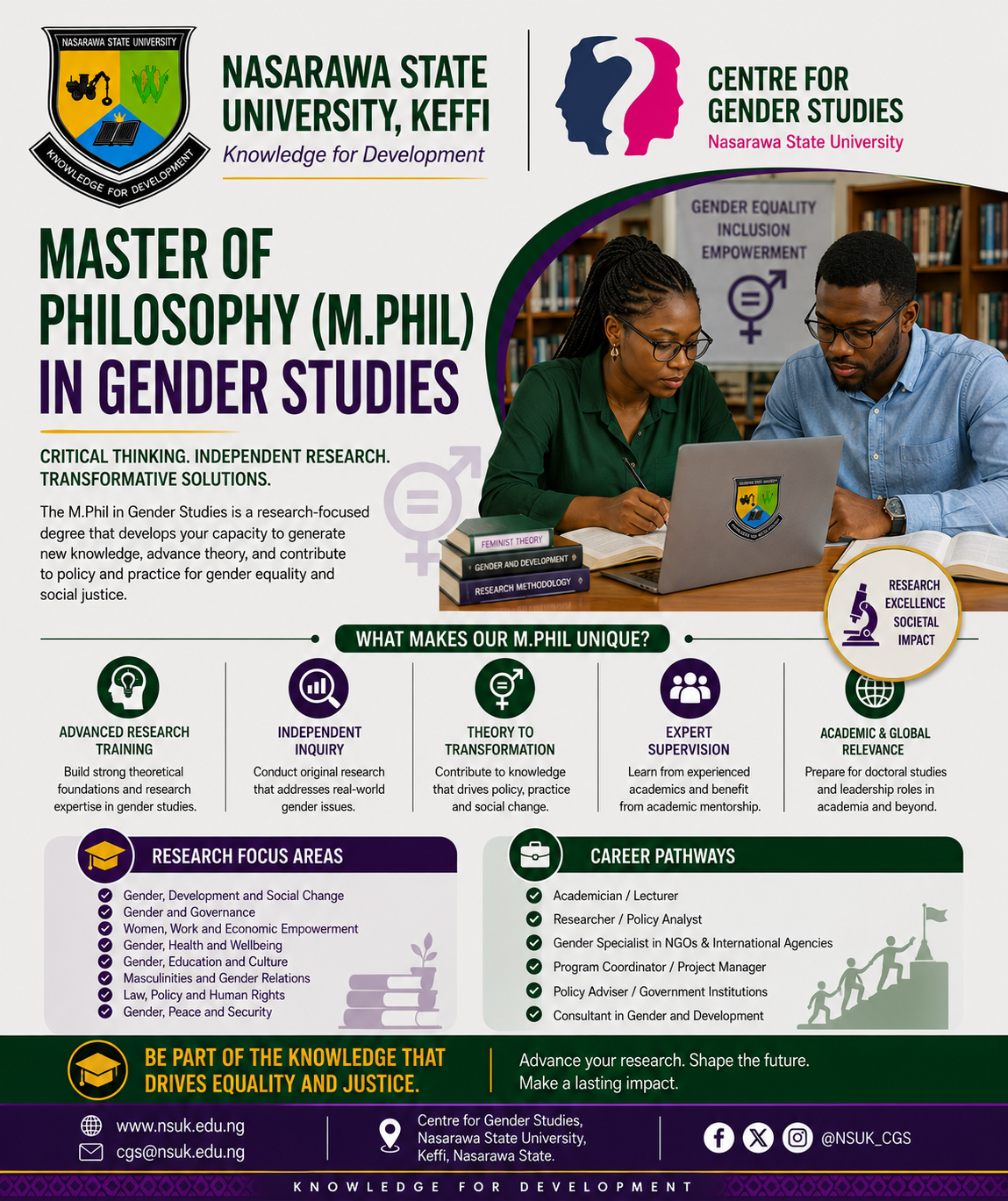
MPhil in Gender Studies
The Master of Philosophy (M.Phil.) Degree Programme in Gender Studies is designed to provide advanced scholarly training and research-focused education in the field. The programme aims at equipping students with robust theoretical foundations and sophisticated analytical skills to critically examine and transform gender relations in contemporary society. It is structured to produce highly qualified scholars, researchers, and consultants capable of advancing knowledge and solving complex gender-related challenges in Nigeria and beyond.
Objectives of the Programme
i. To prepare and qualify the students to run a full-time Master of Philosophy programme in Gender Studies.
ii. To foster independent scholarship and competence in research.
iii. To foster in-depth knowledge in a chosen area of specialization.
iv. To prepare students for gender studies, as academics, researchers in higher educational institutions, research institutes and as consultants on organizational systems and societal management dynamics.
v. To develop awareness of how gender perceptions shape personal consciousness and interpersonal relationship.
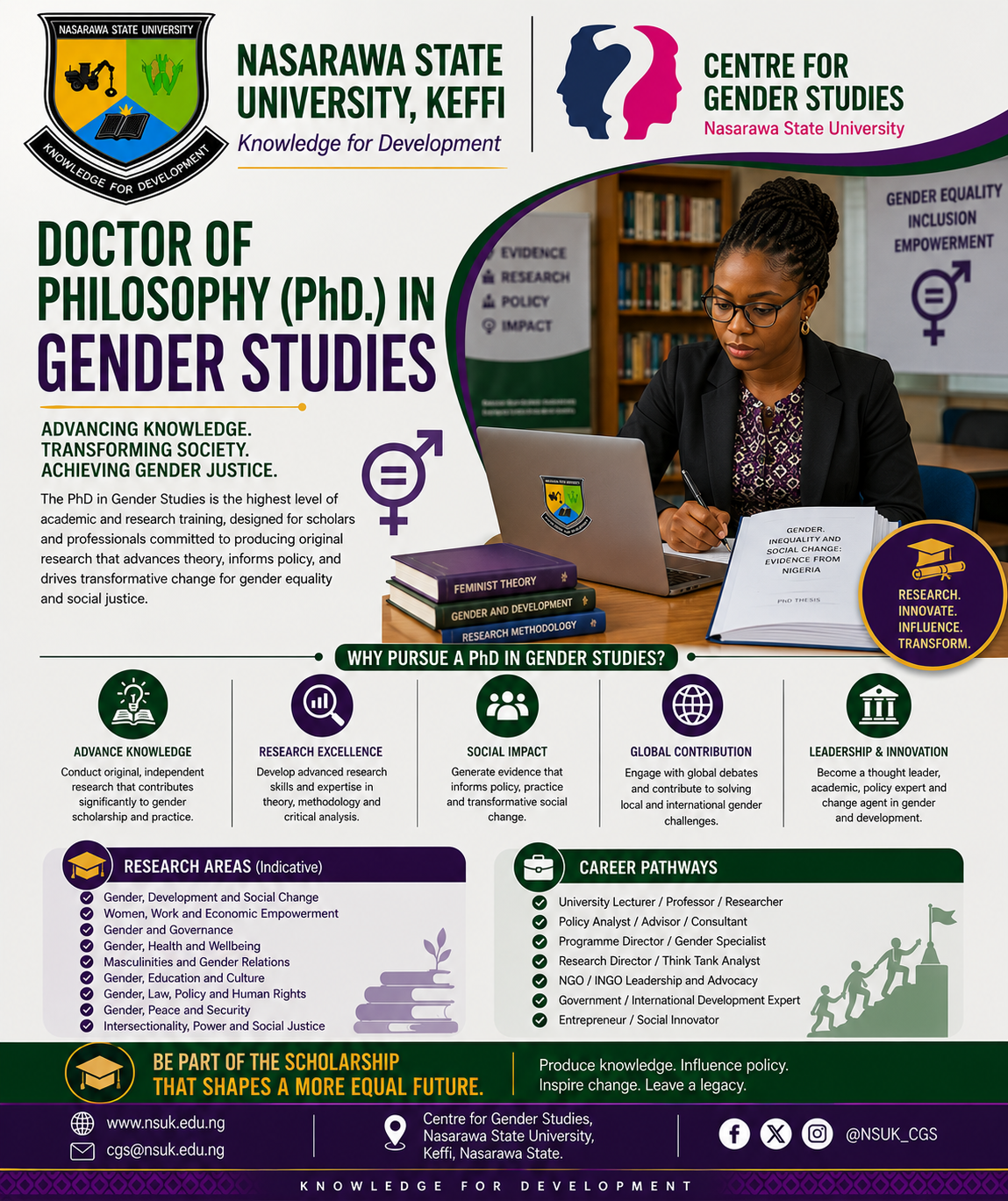
Doctor of Philosophy (PhD.)
The Master of Philosophy (M.Phil.) Degree Programme in Gender Studies is designed to provide advanced scholarly training and research-focused education in the field. The programme aims at eThe Doctor of Philosophy (Ph.D.) Degree Programme in Gender Studies is designed to provide advanced doctoral training and original research-focused education in the field. The programme aims at equipping students with critical theoretical frameworks and sophisticated methodological skills to independently advance knowledge and transform gender relations in contemporary society. It is structured to produce highly qualified academics, independent researchers, and consultants capable of pushing the frontiers of knowledge and solving complex gender-related challenges in Nigeria and beyond.
Objective of the Programme
1. To prepare and Qualify the students to run a full-time Doctor of Philosophy programme in Gender Studies.
2. To develop researchers who are well equipped to undertake research challenges of the future for benefit of the society.